We are innovative, ambitious and ready for challenges! Hire Us





Anti-Piracy Strategy for Online Learning Platforms: 6 Best Tips
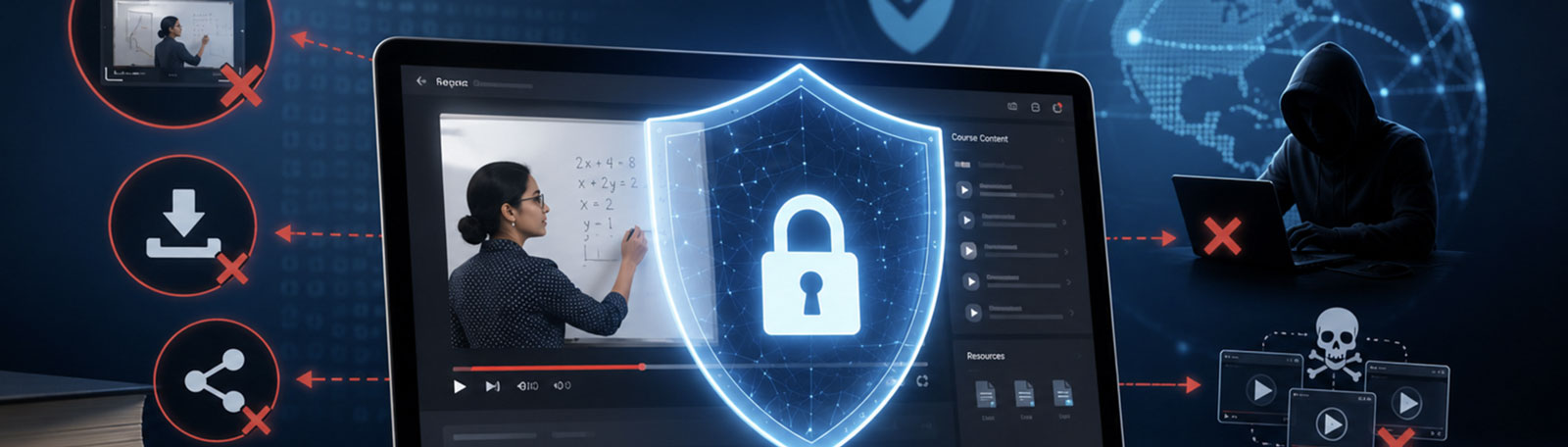
An anti-piracy strategy for online learning platforms is essential as course libraries continue to expand. An Ed-tech platform may have hundreds of recorded classes, PDFs, mock tests, and e-books for various courses and programs they offer. Tracking every piece of content and where it appears online can become difficult, as unauthorised copies can spread across multiple platforms. In order to tackle this, online learning platforms need a structured approach to protect their content from getting pirated. In this blog, we will learn how online learning platforms can adopt a proper strategy to protect their content.
How to Build an Anti-Piracy Strategy for Online Learning Platforms
Not all pieces of learning content face the same level of piracy risk. Premium courses, new programs, elite test series, and question banks are very attractive to unauthorised distributors. Platforms should identify which content is most valuable and most likely to be pirated.
For example, if there is a newly released course or some other high-demand course around the exams, then it requires close monitoring, as these are highly prone to being copied and shared on various platforms. Instead of treating all the infringements in the same way, platforms can categorise content based on need and demand, this helps in strengthening their anti-piracy measures.
Monitor Where Your Content Is Being Shared
Identifying the content that is at high risk is just the first step. Platforms also need visibility into where the content is being distributed without any authorization. Monitoring should extend beyond a platform’s own website, such as,
Search engines
Telegram channels
Social media platforms
File sharing services and
Other online sources
Searches can be based on course or faculty names, lesson names, or test series names, and other information. Continuous monitoring can help in effective detection of unauthorised copies before they spread further. BLOCK X combines AI-powered monitoring with human intervention to help identify unauthorised content across various digital channels and supports timely enforcement.
Detect and Document Infringements Quickly
Finding an unauthorised copy does not immediately establish the full scope of an infringement. Platforms should first verify that the content is used without permission and shared across multiple channels and then collect relevant evidence.
This may include the URL where the content appears, screenshots, or other file information. Maintaining clear-cut evidence can strengthen the enforcement process and make it more efficient and organised. Speed is very important here, as the longer the unauthorised content remains online, the more it can be downloaded and distributed further. So, early detection gives platforms a greater opportunity to limit the spread.
Take Action and Remove Unauthorised Content
Once an infringement is identified and recorded, the Ed-tech platform can proceed with enforcement action. But, the process varies depending on where the content is shared, for example, it might involve submitting copyright complaints in some cases while others might involve submitting takedown requests to websites.
The goal here is to not just identify piracy, but also to remove the infringed content permanently. Platforms need to stick on to a clear process for handling repeated infringements, and at times just platform level enforcement will not be sufficient and will require a legal action.
Monitor for Reuploads and Repeat Infringement
A successful takedown does not necessarily mean the problem has ended. The same recorded lecture, PDF, or test series can be uploaded again through a different URL, account, Telegram channel, or website.
This is why post-takedown monitoring is an important part of an anti-piracy strategy. Platforms should continue looking for reuploads and identify recurring sources of infringement. Tracking these patterns can help reveal repeat infringers and distribution networks, allowing future enforcement efforts to become more targeted.
Instead of treating each takedown as an isolated task, platforms can use information collected from previous incidents to strengthen their overall monitoring and response process.
Build a Proactive Anti-Piracy Framework for Online Learning Platforms
An effective anti-piracy strategy brings these activities together into a repeatable process. Online learning platforms need to follow steps such as:
- Identifying high-risk content
- Continuously monitor digital channels
- Verifying and documenting infringement
- Initiate timely takedowns
- Track reuploads
- Escalate serious or recurring cases
A stronger approach combines proactive monitoring with timely enforcement and continuous follow-up. BLOCK X offers a bundled anti-piracy solution for online learning platforms by offering the below-mentioned services like:
Content monitoring
Infringement detection
Evidence collection
Takedown support and
Ongoing enforcement
This allows platforms to manage different stages of the anti-piracy process with a more streamlined approach rather than relying on multiple disconnected processes.
Conclusion
As course libraries continue to grow, an effective anti-piracy strategy for online learning platforms needs continuous visibility into how and where content is being distributed. A combination of proactive monitoring, quick detection, and timely enforcement and help platforms respond much better to piracy.
For online learning platforms that are looking to strengthen their approach, partnering with BLOCK X, a top anti-piracy company in India, is the right move. It offers the support needed to monitor, detect, and act against unauthorised content. With a proper approach and effective strategy, online learning platforms can protect their content ownership and preserve the commercial value of their digital courses.
Recent Blogs